
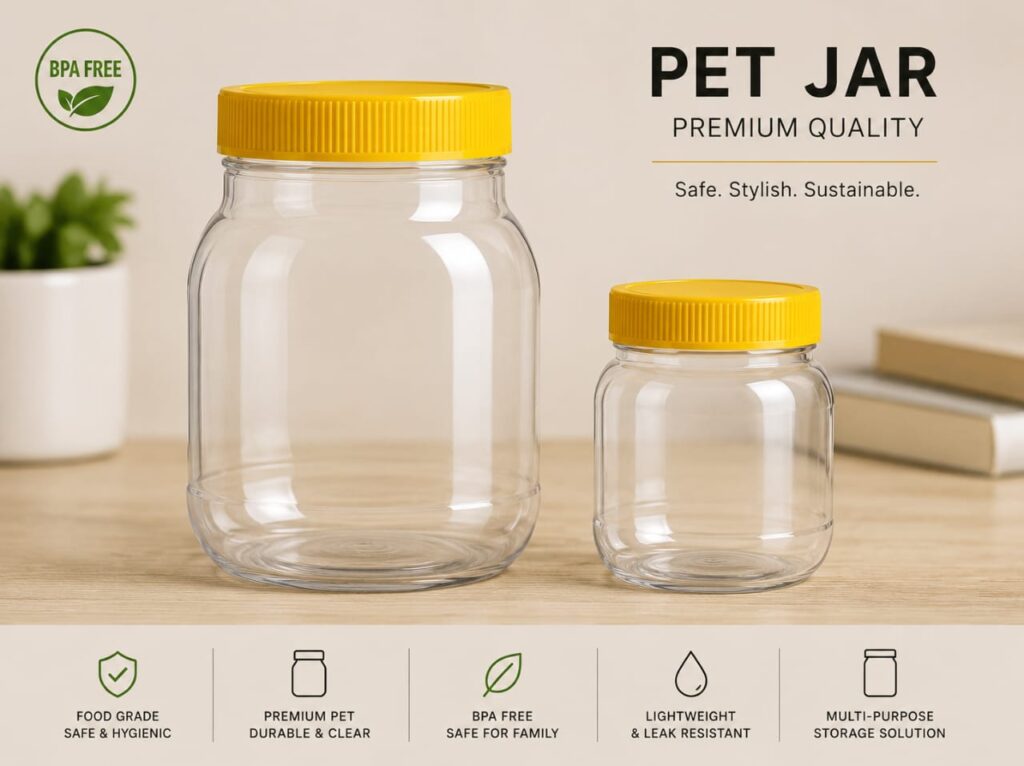
As sustainability becomes a major focus across industries, FMCG brands are actively searching for packaging solutions that balance environmental responsibility, product protection, and cost-effectiveness. Consumers today are more conscious about the environmental impact of packaging materials and prefer brands that adopt sustainable practices. In this evolving market, PET jars have emerged as a practical and efficient packaging option for a wide range of products, including food items, snacks, confectionery, spices, personal care products, and household goods. The growing demand for Eco-Friendly Packaging for FMCG has encouraged manufacturers to explore innovative ways to make PET packaging more sustainable while maintaining quality and performance.
Thank you for reading this post, don't forget to subscribe!PET (Polyethylene Terephthalate) is a lightweight, durable, and highly recyclable plastic material. One of the key advantages of PET jars is their ability to be recycled multiple times, reducing the need for virgin plastic production. Compared to heavier packaging materials such as glass, PET jars require less energy during transportation due to their lightweight nature. This helps lower fuel consumption and reduces carbon emissions throughout the supply chain. For FMCG companies managing large-scale distribution networks, this can significantly contribute to sustainability goals while also lowering logistics costs.
Another important factor supporting the sustainability of PET jars is their excellent product protection. PET packaging offers high clarity, moisture resistance, and durability, helping products remain fresh and protected during storage and transportation. Reduced product damage means less product waste, which is an important aspect of sustainable packaging. Many FMCG brands are now using PET jars for dry fruits, candies, snacks, spices, protein powders, and health supplements because they combine convenience with reliable protection.
Advancements in recycling technologies have further improved the environmental profile of PET packaging. Many manufacturers now incorporate recycled PET (rPET) into their packaging solutions, helping create a circular economy where used plastic is collected, processed, and transformed into new packaging materials. This approach reduces plastic waste and conserves natural resources. As recycling infrastructure continues to expand globally, PET jars are becoming an increasingly viable option for businesses seeking environmentally responsible packaging solutions.

The concept of Eco-Friendly Packaging for FMCG also involves reducing overall material usage. PET jars can be manufactured using optimized designs that require less raw material while maintaining strength and functionality. Lightweight packaging not only reduces material consumption but also decreases transportation-related emissions. In addition, PET jars are available in various sizes, shapes, and closure options, enabling brands to customize packaging according to product requirements without compromising sustainability objectives.
For businesses aiming to improve their environmental footprint, choosing high-quality recyclable PET jars can be a practical step toward sustainable packaging. Responsible sourcing, efficient recycling programs, and consumer awareness initiatives further enhance the sustainability benefits of PET packaging. While no packaging material is entirely impact-free, PET jars offer a balanced combination of recyclability, durability, affordability, and product protection that aligns well with modern FMCG requirements.
As consumer demand for sustainable products continues to grow, PET jars are expected to play an important role in the future of packaging. By adopting recyclable and resource-efficient packaging solutions, FMCG brands can support environmental goals while maintaining product quality, brand appeal, and operational efficiency in a highly competitive marketplace.
FAQs :-
Are PET jars an eco-friendly packaging solution for FMCG products?
Yes, PET jars are considered an eco-friendly packaging option because they are lightweight, recyclable, and require less energy during transportation. Their durability also helps reduce product waste, making them a sustainable choice for FMCG brands.
Can PET jars be recycled after use?
Absolutely. PET jars are 100% recyclable and can be processed into new packaging materials, textiles, and other products. Proper recycling helps reduce plastic waste and supports a circular economy.
Why do FMCG companies prefer PET jars over glass packaging?
PET jars are lighter, shatter-resistant, and cost-effective compared to glass. They reduce transportation costs and carbon emissions while providing excellent product visibility and protection.
Are food-grade PET jars safe for packaging consumable products?
Yes, food-grade PET jars manufactured by Radhika Polymers are designed to safely store dry fruits, snacks, spices, candies, and other FMCG products while maintaining freshness and quality.
How do PET jars support sustainable packaging goals?
PET jars support sustainability through recyclability, reduced material usage, lower transportation emissions, and long-lasting performance, helping FMCG businesses achieve environmentally responsible packaging solutions.

